Jun 222014
 

Would you like your students to watch YouTube videos – but legal ones?  Or are you from a school or institution that’s trying to stay on the right side of the law when it comes to videos? If so, this post is for you…

Can I play any video if it’s for educational purposes?

No. Whether a video is played in an educational or not-for-profit context makes no difference. To avoid breaking the law, you need the permission of the people who own or hold the copyright. If someone has posted a YouTube video and made it public, that’s basically like an invitation to view it. So an important question is, did they have the right to post the video? Unfortunately there are a lot of illegal videos on YouTube posted by people who don’t own the rights. But fortunately it’s pretty easy to work out which ones are legal and which ones aren’t.

isitlegal

Maybe a video is legal if it has YouTube’s ads?

If it has ads, someone has claimed copyright and is getting paid – so you’re on pretty safe ground. It can still be tricky because music unions have claimed rights on all sorts of videos that don’t necessarily belong to them, but ads are an indication that you’re probably looking at a legal video.

What about movie trailers and clips, and music videos?

As a general rule, movie clips and trailers are available to licensed distributors before the date of release and then for around 3-6 months after it’s been released. It varies from studio to studio. If you want to share movie trailers and clips,  link to the movie studios’ own YouTube site. You can be sure that they’re going to be legal then. Bear in mind that the videos get taken down regularly, so they may disappear after a few months. (The movie trailers at www.simpleenglishvideos.com are legal and licensed.)
It’s much the same for music videos. If you’re watching a song from the official site of the artist or recording label, you can be pretty sure you’re doing it right.

How else can we tell if a video was posted legally?

– Is it a TED talk or TED Ed piece? If so, that’s probably fine.

– Check the written details underneath the video (if there are any). If the poster (the person who posted the video) says it comes from an ebook or a movie and they don’t say they have permission to post it, then you probably shouldn’t be linking to it.

– Check the poster out. What’s their name and what do you see when you click on the link to their YouTube channel?

  • Was the video posted by an organization or company? There are lots of legal videos posted by bonafide organizations that you can link to without problems.
  • Is it an individual who appears in the video? If it looks like the video was posted by its content creator then again, it’s probably fine.
  • But what if the name of the individual seems to have no relation to the content? And when you check their channel you see other videos made in different styles? Then probably you are looking at videos that were posted illegally and you shouldn’t be sharing them.
  • Are you looking at a clip from a TV show or news programme that seems a bit fuzzy and/or seems to have been posted by an individual who has no relation to a TV channel or network? Then chances are the poster recorded it off air and doesn’t have the rights.
  • If  in doubt, message the poster and find out. Ask where they got the video from and whether they have the permission of the copyright owner to post it.

clickonPosterIsn’t it hard to tell if a video is legal or not?

No, it’s usually pretty obvious. Armed with the info above and  a bit of common sense, in practice it’s easy. It’s rather like looking at your emails and recognizing which ones are spam. Sure, you may get it wrong sometimes, but mostly you’ll be right. (In fact, I think spotting illegal Youtube videos is easier than spotting spam these days.)

And let me be clear – I am by no means an expert on copyright law. Over the years, I’ve sometimes found myself researching bits of it,  but that’s just made me more conscious of how complex it is and how much I don’t know. But I still think it’s easy to stay legal and follow the law, so I offer these tips hoping they might help my colleagues.

Also there are lots of issues I haven’t touched on here such as YouTube’s licenses (standard and creative commons), what constitutes a public performance (I’ve never been able to find a clear answer for that for some of the contexts I encounter) and whether it’s OK to download a video to play later in your class without the permission of the rights owner (probably not).

Over to you…

Please bear in mind that I could be wrong about some of these things and other folks may have other thoughts, which I’ll be very interested to hear. Copyright laws vary from country to country too. Please add corrections and extra information to the comments. And for more accurate and definitive answers, please consult a lawyer.

 Posted by at 3:29 am
Apr 042014
 

The grammatical rules we follow when we use phrasal verbs and verbs with particles are so complicated. There’s a wonderful video of Dave Willis talking about the futility of teaching them at the 2010 IATEFL conference in Harrogate. (So not this year’s conference, but the one four years ago.) Sadly Dave has passed away since then. I’m so glad his talk was captured because it gave me a chance to see him in action again. Not only does he make perfect sense, but he was a lovely guy.

So how can we teach two and three part verbs? I recommend presenting them in context so the meanings are clear, pointing out the tricky word order patterns and then practice, practice, practice. So when I saw Jason R Levine (aka Fluency MC) performing a catchy rap for practising some, I got the camera out.

Here’s a video we made which presents ten common two part verbs in context and demonstrates how the word order works.
 
And here’s the second one we made where you see Jase’s rap and where students can sing along for lots of practice, practice, practice.

Hope you like them and thanks to Jase for the inspiration. As always, both videos are available with clickable transcripts at the Simple English Videos website.

 Posted by at 2:37 am
Mar 182014
 

Many languages have one verb that performs many of the functions of both ‘make’ and ‘do’ in English, so they can be tricky  for students to master.

But they’re also tricky to make a video about in some ways. There are some general patterns and rules English speakers follow when they use them, but  in lots of cases, it’s a matter of usage. We use one verb and not the other because … well, that’s what we do. So as well as learning the general rules, learning common collocations with ‘make’ and ‘do’ seemed  important too.

And that’s why we’ve made two videos about them. The first one covers the basic rules English speakers follow when they use the verbs and here it is:

The second has examples of some common collocations with ‘make’ and ‘do’ and here it is.

Hope they do the trick and make learning these verbs fun. As always they are available with clickable transcripts at our Simple English Videos website.

 Posted by at 4:31 pm
Feb 282014
 

jaybadguy300x250A simple rule of thumb for safety and security is:

safety: preventing accidents – security: preventing theft.

But in these days of  terrorism, organised crime and breaches in information security (not to mention Sarbanes Oxley, compliance and all the rest) life has got a lot more complicated.

We reasoned that if you were using technical English or English for business, you’d probably need to go a bit deeper, so we wound up making two videos. Here’s the first one which has a simple explanation that will hopefully answer key questions for most pre-intermediate students.

And here’s the second one for students who need a deeper understanding.

You may have your own thoughts on these words and if so, do please add them to the comments below. Who knows – maybe a third video is required here…

Both videos are available with clickable transcripts at Simple English Videos dot com. Hope you like them!

P.S. Many thanks to Stephen Charles for suggesting this topic! And don’t forget to tell me if you have any ideas for video topics folks.

 Posted by at 12:14 am
Feb 172014
 

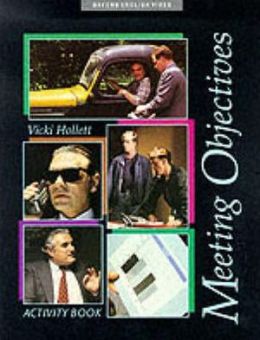
Does anyone have either of these Activity Books to spare? There don’t seem to be any around on Amazon (or not at a reasonable price) and now the videos are available again, I’ve just had a teacher ask for help getting hold of one. If you have a copy you don’t need on your shelf that you’d be happy to part with, could you drop me a line and I’ll hook you up.

Thanks a lot!


 Posted by at 10:31 am
Feb 112014
 

Pasportcontrol300x300

Check and control can be tricky verbs for students. At passport control you’d think they’d control our passports, but of course they don’t – they check them instead.

And in this age when security and compliance are big issues, they seem like very handy verbs for business English students to master to me.

So here’s our video on Check and Control. As always, it’s available with a clickable transcript at Simple English Videos and also on YouTube.

 Posted by at 9:43 pm
Jan 282014
 

This contains some scenes from another video we made a while back and we’ve added a lot of new content. It’s great to be able to go back and have another stab at some of our early videos.  I think our green screen work is getting better though the photo-shopping clearly needs attention. Ha!

Again, it’s available for free with a clickable transcript at https://www.simpleenglishvideos.com/language/ and there are also teaching materials available in the store. And a big thank you to Jason R Levine for making another cameo appearance for us.

 Posted by at 2:25 am
Jan 252014
 

When we first started making videos, we made one on ‘Lend and Borrow’. It was just one minute long and it went very fast. I saw a great video that Marissa Stephenson made about the topic and she inspired me. So with some help from Fluency MC we set to and made this new version.

It’s available for free with a clickable transcript at the Simple English Videos website. And if you’d like to buy some PowerPoints and class worksheets, they’re available for $2 in the Simple English Videos store.

Oh and we also made another video to follow on from our recent one on ‘On time’ and ‘In time’. We had some great comments and questions on that so we made a follow up. Here it is.


 Posted by at 12:14 am
Jan 032014
 

Here are some videos that can give your restaurant role plays a new twist.

First students watch part one and predict what Carter (the dog) is thinking and saying….

Then they watch part two and compare with their predictions…

Next they suggest what the waiter is saying. Then you just have to provide a menu (or the class might like to brainstorm  one together that can include some local delicacies). Assign roles (customers, waiter/waitress) and you should be all set for a restuarant role play.

The videos are also available with clickable transcripts at my Simple English Videos website.

And if you’d like to make your life really easy, there are some teaching materials for sale in the store there. They include a worksheet and PowerPoint with lots of images from the videos.

Happy new year!

 Posted by at 5:16 pm
Dec 042013
 

We had a lot of help making this video. Big thanks are due to Zehra and Zeynep for being our stars – and also to their Dad, Turgay Evren for videoing them for us. And our thanks go to Jason R Levine as well, who kindly made a guest appearance for us.

It’s a lot of fun collaborating on projects like this and if anyone has any ideas for video clips that you could send us that we could incorporate into the videos we’re making, please tell us.

Also below is a video we made a little while back about ‘I don’t mind’ and ‘I don’t care’.

As always, both of these videos are available with clickable transcripts at the Simple English Video website. And if you haven’t subscribed to my Youtube channel yet, please do!


 Posted by at 7:44 pm