
Today we added two new videos to our new playlist on prefixes and suffixes. The first one is about the prefix bi-.
And the second one is about the suffix -able.
We plan to make lots more of these over time.
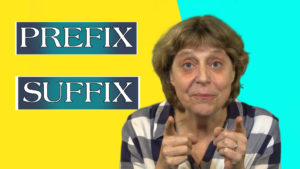 DRUM ROLL….. We are delighted to announce the launch of a new video playlist!
It’s designed to help ESL learners understand the meaning and grammar of English words with prefixes and suffixes. We think it’s great way to grow vocabulary fast and great study material to improve scores in exams like IELTS, TOEIC and TOEFL. The first video came out today and we’ll be publishing two more this week. Do hope you like it!
Here is the introductory video:
And here is the first video.
And here is a link to the playlist: https://www.youtube.com/playlist?list=PLwrM2Wcy_MsDXAyBxhc6iUutf_DUdpoXn
Have you ever thought about making your own English language teaching videos? Then let’s get together! Next month I’ll be giving an online course on Creating ELT Videos with the wonderful team at iTDi, where we’ll be collaborating and developing our video making skills. Please tell all your teacher-friends about it and come join us for some wonderful creative fun, fun fun!

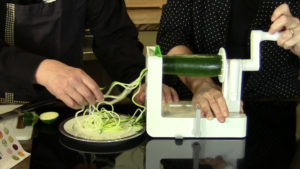 In our latest video we look at common ways we use the prepositions ‘for’ and ‘to’ in English and look at how we use them both to explain purpose (What’s it for? You use it to…). You also get to see our new spiralizer in action.
This is a particulary handy video for Spanish and Portuguese speakers because the same preposition (para) would be used in a lot of these situations.
Let us know if you like it and tell us about your favourite gadget and what it’s for in the comments below or on YouTube. Oh and please share it if you like it.
You can subscribe to our YouTube channel here: https://www.youtube.com/subscription_center?add_user=vickihollettvideo
Also, did you know that we have a Facebook Page where we post a video every day? https://www.facebook.com/SimpleEnglishVideos/
Twitter: @vickivideos
Today is deaf awareness day, so we’ve made a special video. If you want to know how you can help the deaf community and also help us teach the world English, please watch it, share and help us by writing translations!
This video was suggested to us by my friend Rikki Poynter who is deaf herself. She does awesome work as an advocate for captions for the deaf and hard of hearing. Go Rikki!
Here’s another video we made about captions that explains more about how to translate them. https://www.youtube.com/watch?v=QTkElmxpv8I
We can’t say thank you enough to the people who have helped us by doing this.
Happy Deaf Awareness Day everyone!
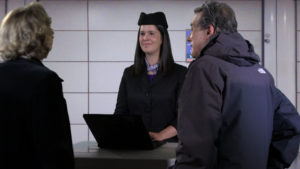 I’m just back from Europe where I spent a good deal of time in airports and saw airline personnel and travellers struggling through the check in process. It can be a daunting procedure if your English is only elementary, but hopefully this video will help learners understand and know what to expect.
It was made with our dear friend Rachel of Rachel’s English. She has the best channel on the YouTube for improving your English pronunciation and you can subscribe to it here.
Here’s her video where she analyses our pronunciation.
Our video is also available with a full transcript on our website here.
Avoid and prevent are handy verbs but there are a couple of mistakes students often make with them.
First, they often get the structures wrong and try to follow them with an infinitive. Both verbs are followed by nouns or gerunds.
And second, there’s a slight difference in meaning that they’re not always aware of. This video is designed to help them use both words correctly.


 Learn how we use the verbs ‘Can’ and ‘Could’ in English in this #ESL video. We answer viewers questions and share a news update about our live English lessons.
