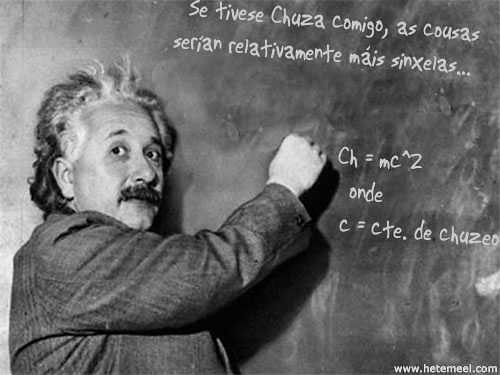
When Albert Einstein visited Oxford University in 1931, someone with foresight thought to preserve the blackboard he used when he was talking about the theory of relativity. When my colleague, Megan, came across Einstein’s blackboard many decades later, it intrigued her. She felt that the impressions teachers leave on their students couldn’t be captured or quantified, but with modern technology, she knew their seemingly random scribbling and half-drawn pictures or symbols could.
So she set out to capture some of them. Megan feels there’s a moment before the classroom blackboard gets wiped when the echo of the class still hangs tangibly in the air. There’s an expectation that the impressions that teachers leave on students are not as transitory or delicate, as those they leave on the blackboards. And that thought gave birth to the Blackboard Project
So here’s a request to teachers reading this. Before you wipe your next blackboard clean, please take a photo of it and email it to Megan. As she says: ‘We do not have to be Einstein to make a difference in the lives of others’. But through blackboards, she’s hoping it’s possible to capture some glimpses of the energy of ideas of classes, however random they may seem.
Here’s a blackboard picture that Megan snapped at the end of one of my classes. It’s my handwriting and I’m sure I wrote this, though I’m no longer sure why. But I think that’s actually one of the Blackboard Project’s charms. Meanings are closely related to time and context, and deciphering that can be intriguing. Who knows what will emerge if teachers from around the world share their blackboards across time and diverse contexts.
So teachers whip out your cameras and come join in this international project. Take a shot of your blackboard, white board or smart board and send it to Megan at blackboard project 1 @gmail.com (with no spaces).
Quite a few of my technical English students have been involved in testing in some way – conducting experiments, reporting results, evaluating test data or whatever. So I was pleased to come across a scene in a public domain movie that depicts scientists performing various experiments and tests on a fabric. I wondered if it could provide some useful extra practice after a lesson on the topic of testing or the properties of materials – for example Unit 11 in Tech Talk Pre-intermediate or Unit 9 of Tech Talk Intermediate.
The video comes from an old 1953 movie. The original sound track was pretty poor and after clean up work, it’s still not great so I’ve prepared a transcript. I’ve also tried to jazz the first part of the video up a bit to give it a more contemporary feel.
So here’s a possible lesson idea – see what you think.
1. Tell your students that they are going to watch a 2 minute video. When it finishes they should tell you what they saw. (A neat way to do this is to have half the class looking at the screen so they can see and listen. The other half turn their chairs round so they can only listen. Then the first students pair up with one of the second ones and tell them what they saw. After that they have to keep quiet while you quiz the second ones.)
With any luck there may be some discussion because the effects I’ve added have made it tricky to see what’s happening at some points in video 1. Key points to establish:
The story takes place at an oil refinery in Texas in 1953
The police are chasing someone/something that’s wearing a space suit/deep sea diving suit. (Let’s call this thing Mr X)
Mr X runs into a building where he takes off his helmet and suit.
Mr X seems to be invisble. So we see his suit being folded up and placed on a table but we don’t see him doing it.
The police break open the door of the building, but they don’t find Mr X. They just find his suit and helmet.
2. Tell the class that they are scientists who are going to help the police. The police have brought them the helmet and suit and they are hoping for information that could tell them where Mr X comes from or anything else about him. Brainstorm a couple of experiments or tests they could run with the whole class to get them going. (You want a ‘what’ and a ‘why’ – e.g. weigh the suit and helmet in order to find out how heavy they are.) Then put your class into groups. Task them with coming up with a list of different experiments and tests to perform on the suit and helmet.
3. Collect feedback from the groups and make a list of the different tests on the board. (You can write the list yourself or give a student the job – good note taking skills practice.)
4. Tell the class that they’re going to watch some scientists performing some tests and experiments on the suit. They should see whether the scientists in the movie performed any of the tests they suggested, and if they performed any they hadn’t thought of. Play video 2 and then go back to the list on the board. See how similar the students’ list was to the tests the scientists actually performed. (Possible talking point: what tests can we do today that weren’t possible in 1953.)
5. There’s lots of vocabulary to check when you play the video 2 again. Click here for the script: Phantom From Space script
6. There’s also a third video but I have no idea how I’d use this. I did enjoy this line in the dialogue though:
This space suit is conditioned to function above 63,000 feet where human blood would
boil, resulting in the body expanding to twice its size, and death of course.
Ha! Well yes, I guess death would be one of the consequences.
If you find a use for any of these videos, please come back and share your experiences. All advice for changes and ideas for further exploitation will be really gratefully received.
Many years ago a friend passed on a funny document, knowing how much I’d love it. (Thanks Roger!) I’m not sure of its origins but as I understood it, it originated at Royal Dutch Shell where it was circulated as a joke between Dutch employees who were often struggling to understand the indirect remarks of their British colleagues. I could be totally wrong about that though, so readers do please tell me if you know anything about its history.
It’s three lists: phrases British people say, what they really mean and what their Dutch colleagues understood. Needless to say, what’s said and what’s understood are very different things.
If it’s hard to read my much copied version, you might like to check out another version that turned up on the Economist blog a while ago.
When I’ve shown it to students, I’ve often wondered if it would work better as a video exercise, so they could hear the tone of voice and see the accompanying body language. So when I get time and can find a willing British English speaker, I’ll have a stab at making a video. So watch this space and please tell me if you think your students might find it amusing. Also, do you think Americans would be as indirect?
I went to NYC to learn more about Adobe’s editing software
I attended a BESIG conference online. (Thank you @carldowse and the BESIG BOT for making virtual attendance possible
I went to a face-to-face edubloggers conference in Philly (saw the delightful Shelly Terrell, who incidentally was astonished that I don’t have a US cell phone or a tablet computer – am I weird that way? )
I unpacked a new desktop computer and discovered it has a sort of Star Wars appearance and theme. Apparently I share an attraction to fast graphics cards with video gamers who tend to be interested in scifi. I even found a baseball cap with an alien on it in the packaging. ( ‘merican husband thinks it’s very appropriate. To him, I am an alien)
I made a 30 second video of Brad Patterson speaking about a free dictionary app that EduLang has developed called SnaPanda. (I included shots of real pandas, for those who prefer the non-virtual kind.)
Phew!
Quick thoughts on tech and teaching:
We’ll be seeing more mobile apps for English learners and more data in the cloud. But my hunch is that the tech that may impact most on EFL/ESL course design and teaching soon is voice recognition.
Speech-to-text has been slow to materialise, but…
1. Youtube/Google does a good job matching captions to videos when I provide the script now.
2. My video editing software also does a good captioning job with a script. And importantly it can also tag when each word is spoken in the metadata of the video clips, and make them quickly searchable. (I mentioned the search capabilities over at English Central the other day – similar thing.)
These speech to text capabilities mean we can automate the compilation of metadata – so we’ll have much better search capabilities. I do hope we use them wisely though – just because we can doesn’t mean we should. I wouldn’t like to see a proliferation of unthought out learning objects. More on that another day, but in the meantime, whaddya think of my new baseball cap?
English language course books tend to be populated with characters that live and die in the space of a short dialogue. Context is constrained because it takes time to set it up. But these writing restrictions get loosened up with video. We can take in a lot more information when we can see things happening.
Body language conveys meaning, obviously, and so does how we say things, so for example ‘Yeah right’ can signal agreement and ‘Yeah right’ can signal sarcastic disbelief. And things mean different things depending on who says them and where. If we’re going round an art gallery together and I point to a picture and say ‘That’s a nice one’, you’ll think I like the picture. But if you’re a sales person in a green grocers and I point to a cauliflower and say ‘That’s a nice one’, it means ‘I want to buy it’. We play a lot of different roles in our lives and what role we’re playing at a particular time impacts on meaning.
So imagine what it would be like to have access to a large spoken corpus that’s made up of video. Instead of reading things that people said, imagine you could see and hear people saying them. And when you burrowed down to look at how a word had been used, instead of reading rows of written text, suppose you could see and hear people saying the word in different contexts.
So imagine someone took lots of videos -say lots of interesting and entertaining and videos on Youtube. And suppose they started putting them into a database that keeps growing. And imagine that teachers and students could access and search the video corpus.
If you think this sounds cool, check out English Central’s site because they seem to be doing just that. I had low expectations when I entered the website. I had to register and wondered if it would be worth the bother. It was and I’m glad I did. What do you think?
Over on the east coast (where I’m based) it’s easy to forget that Spanish is the second most used language in the United States. According to Wikipedia it’s spoken at home by more than 35.5 million people aged 5 or older.
So I was tickled by this video of Tom Hanks delivering the weather forecast on a Spanish TV channel. Lots of ELF (English as a Lingua Franca) features are evident here:
if you don’t understand, keep smiling and hope you’ll catch on later ( ‘letting it pass’ is the term coined by Alan Firth – see more on that here)
people will speak slowly to accommodate (It’s just good manners. Ettiquette may vary in all sorts of ways across cultures but it’s the human condition to want to help)
on a similar point – look at all the code switching that’s going on here. Hey Tom, we don’t care if you answer us in whatever language you can cope with and think is going to be most comprehensible and express your thoughts best. We’ll adapt.
a lot of shared understanding transcends language and derives from modern culture (e.g. we all know that newscasters performing in front of a greenscreen can’t actually see what region on a map they are pointing to)
Hope you enjoyed it too. If so, let me know with a thumbs up or comment. I’d love to know what mainland Spanish speakers might think of this too.
I thought I’d interview another video enthusiast today. Do you remember ‘A Weekend Away’ and ‘A Week by the Sea’? They were very popular ELT videos written by Peter and Karen Viney (along with lots of other good ones like ‘Mystery Tour’ and the ‘Grapevine’ videos).
Well, they went out of print and Peter and Karen have licensed them back from Oxford University Press and published them themselves. I thought I’d talk to Peter to find out more. Our conversation wound up being rather like an ad for the videos. No, Peter did not pay me to make this. Ha! His videos just sound like a good deal to me.
And it raises the question of whether we can expect more teaching materials to come down in price in this rapidly changing ELT marketplace – especially if they are delivered electronically. Do any of your students have a digital course book for learning English yet? And would you like them to?
There’s an obvious classroom task here – what’s the other person saying? But your students might just like to watch it for fun. Oh and click here for an earlier version.
I love video. I think it’s a treasure chest for teaching English. With video we can provide context more quickly than we can with just audio and bring the outside world into the classroom. And another benefit is it can bring movement to highlight rhythm and other stuff that can make language memorable and enjoyable.
Here’s a (rythmy) video for elementary and pre-intermediate students that I made with my son. (Thanks Tom – love that c-walk!) It’s designed to review the days of the week and common lexical phrases for making arrangements and appointments. It ties in well with Business Objectives unit 8 or other similar lessons. You can set it as homework, or play it in class if you think your students might enjoy a sing-along.
It should be simple to use. They just watch the first video a few times so they get to know the the tune. Then video two is the karaoke version and they sing along. I’m thinking I might need to add a video three with just a few word prompts, so they can test themselves.
Please thumbs up if you or your students like it, or even better, leave me a comment and tell me what didn’t work as well. I’m still experimenting and learning how to do this stuff and all advice and suggestions are really welcome.
The music in this video comes from: http://www.geeksaresexy.net/2010/08/24/how-to-finding-music-for-youtube-videos/
Some other professional English video lessons you might like:
Another totally unrelated thing: I’m giving some online webinars for Pearson next week. They are free to join – you just need to register and have an internet connection. You can register here.Hope to see you there!
I’d like to say a belated but very big thank you to all the kind folks who made me so welcome on my travels and to OUP for supporting me. There are way too many people to mention here but my special thanks go to KFUPM, where I was honoured to be the first official female guest, the warm welcome and inspiration from technical English enthusiasts at SPSP, our kind hosts at the KSAALT conference, the terrific professionals at Prince Sultan University and also to the British Council in Riyadh for their help, support and insights.
Also a huge thank you to English UK for a really interesting day on Business English in London which you can read about here. I learnt stacks of interesting stuff at Rachel Day’s presentation on business grammar from corpora and also loved the session by Richard Gallen. Rather than Wordsmith (which is also very good, incidentally) very impressively, he has been creating really interesting specialized ESP corpora with free concordance software called Antconc .
In my absence the blogosphere has been busy and there are some great new bloggers that business and ESP teachers will want to check out if they haven’t already. (Thanks Evan for tipping me off.)
Oh and I have just discovered that Alan Firth has a blog too! It’s here.
Something I didn’t plan to do when I set off, but it turned out to be a lot of fun, was videoing C-walking. (It’s similar to break dancing but the C stands for clown) Come back soon to see the results. Until then here are the Birj Khalifa fountains in Dubai – gosh, I loved them and now I wanna be a fountain choregrapher.
It’s great to be sleeping in my own bed again, but as I think some folks from this neck of the woods once said, ‘I’m missing you already.’


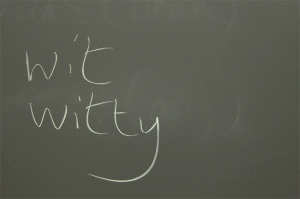 Here’s a blackboard picture that Megan snapped at the end of one of my classes. It’s my handwriting and I’m sure I wrote this, though I’m no longer sure why. But I think that’s actually one of the Blackboard Project’s charms. Meanings are closely related to time and context, and deciphering that can be intriguing. Who knows what will emerge if teachers from around the world share their blackboards across time and diverse contexts.


